

FAQs
Understanding Solar, Made Simple
There’s a lot to consider before going solar, and a lot of information to sort through. At Solar Panther, we believe you should understand the numbers, your options and what to expect before making a decision. That’s why we’ve built a list of frequently asked questions (FAQs), to help you better understand what solar entails.
From determining whether solar makes sense for your home to comparing ownership and leasing, understanding installation and keeping your system performing for years to come, we’re here to make the process clearer. Explore some of the questions we hear most often from Central Illinois homeowners, or get in touch for answers specific to your home and energy use.
What is Solar Energy?
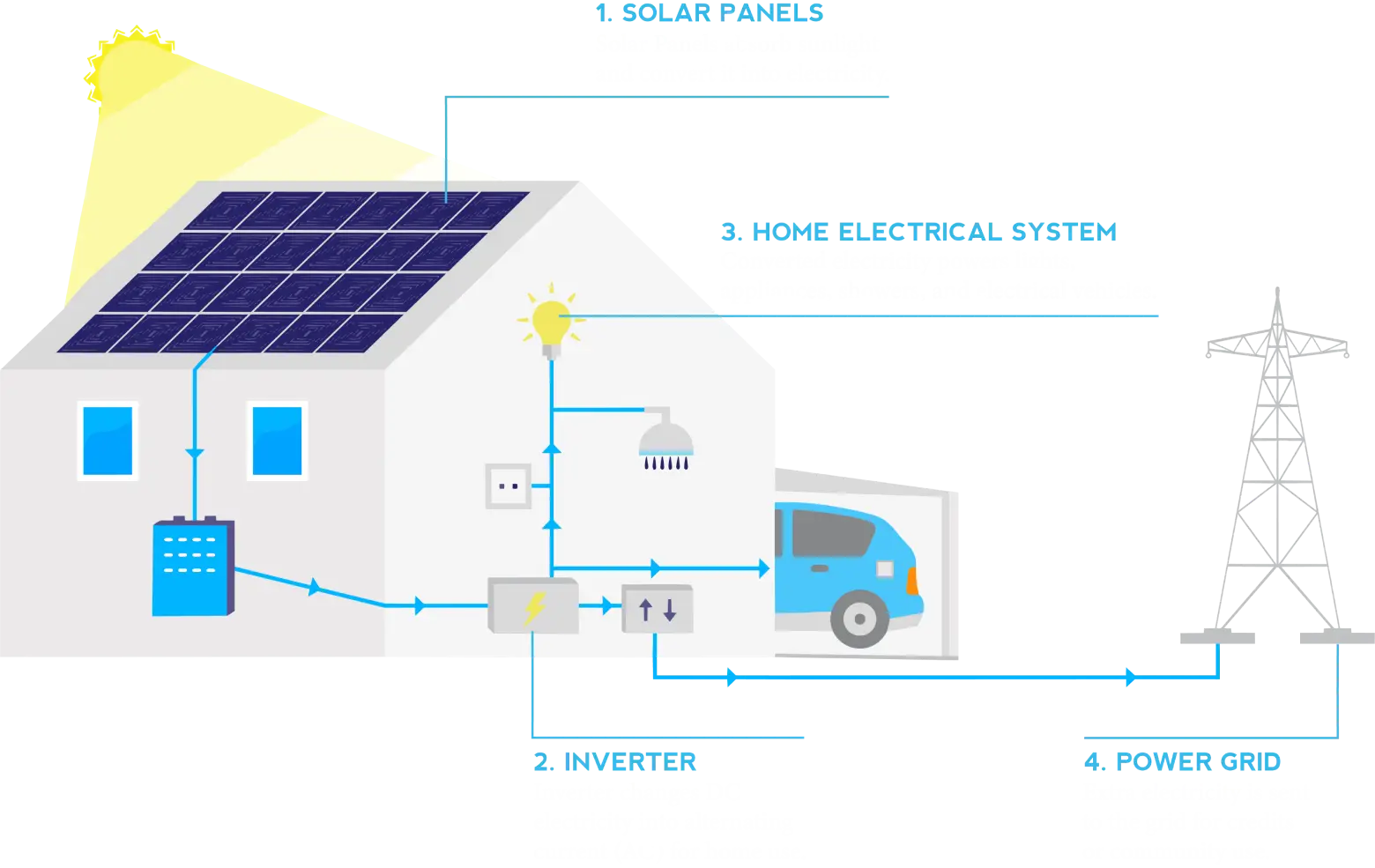
Solar energy uses sunlight to generate electricity for your home. Solar photovoltaic (PV) panels capture sunlight and produce direct current (DC) electricity. An inverter converts that energy into alternating current (AC) electricity that can be used throughout your home. When your system isn’t producing enough electricity to meet your needs, your home can continue drawing power from the utility.
How Do Solar Panels Work?
Solar panels contain photovoltaic cells that generate an electrical current when exposed to sunlight. The electricity produced by the panels is converted by an inverter into power your home can use. How much electricity a system produces depends on factors including system size, panel orientation, shading, weather and available sunlight.
Is solar right for my home?
The answer to this question starts with the numbers. We look at your property, electricity usage, budget, goals and how long you expect to stay in your home before recommending a system. Our goal is to help you determine whether solar makes sense for your particular situation, not convince every homeowner to buy panels.
How does Solar Panther determine what size system I need?
We start with your actual electricity use and evaluate your property to develop a system recommendation around your household’s needs. The goal isn’t to fit as many panels as possible on your roof. It’s to design a system that makes sense for the way you use energy.
Is it better to buy or lease solar panels?
It depends on your priorities. Leasing may provide an opportunity for more immediate monthly savings without purchasing the system, while ownership can offer greater potential long-term financial benefits. Solar Panther can walk you through both options so you can compare the costs, benefits and long-term considerations before deciding.
What if staying with my utility makes more sense?
We’ll tell you. Solar Panther can help you compare three potential paths: continuing to purchase electricity from the utility, leasing a solar system or purchasing one. If the numbers don’t support going solar for your particular situation, we believe you should know that before making an investment.
Will solar eliminate my electric bill?
Not necessarily. Most solar homeowners remain connected to their utility and may continue to receive a bill. The amount depends on factors such as how much electricity your system produces, how much your household consumes, utility charges and the applicable utility rate structure.
Do solar panels work on cloudy days?
Yes. Solar panels can still generate electricity when skies are cloudy, although production may be lower than on a clear, sunny day. In addition, panels do not produce at night. Utility credits or battery storage can help supply electricity when production is lower than usage. Expected production is one of the factors considered when designing a system for your property.
Can solar panels be installed on any roof?
Not every roof is an equally good candidate for solar. Roof condition, age, material, orientation, available space and shading can all influence whether rooftop solar makes sense. Because Solar Panther is backed by Roof Tiger, we can also help evaluate the roofing system beneath your panels and address roofing needs when necessary.
What does Solar Panther handle during installation?
Solar Panther coordinates the entire solar process, including system design, engineering, permitting, installation, utility interconnection and applicable incentive paperwork. We keep you informed along the way so you know what’s happening and what comes next.
How long does it take to get a solar system up and running?
The physical installation is only one part of the process. Before and after panels are installed, a project may require system design, engineering, permits, inspections and utility approval. Timing varies by project and jurisdiction, and our team will help you understand what to expect based on your specific installation.
What is meant by "Permission to Operate?"
Permission to Operate, often called PTO, is the utility’s authorization to activate an interconnected solar system. Solar Panther helps coordinate the utility interconnection process as part of your project.
Will homeowners insurance pay to remove solar panels after storm damage?
If covered storm damage requires your roof to be repaired or replaced, your homeowners insurance may cover the cost of removing and reinstalling the solar panels so the roofing work can be completed. Coverage varies by policy, so contact your insurance carrier and obtain approval before scheduling the work. Solar Panther can evaluate the solar array and provide the information needed to help coordinate panel removal and reinstallation with the roofing project.
What Are The Potential Benefits of Solar?
Solar can offer several potential benefits, from reducing the amount of electricity you purchase from the utility to creating greater predictability around a portion of your long-term energy costs. For homeowners who purchase their systems, solar may also provide meaningful long-term savings. Leasing can offer a different path for homeowners looking for a more immediate monthly benefit.
The actual financial outcome depends on your home, system, electricity use, utility costs and the option you choose. That’s why Solar Panther starts by reviewing your numbers rather than promising a one-size-fits-all result.
DID YOU KNOW?
Going Solar Doesn’t Have to Mean Buying Solar.
Solar Panther can help you compare staying with the utility, leasing a solar system and purchasing a system to see which path makes the most sense for you.
Potential Benefits
- Lower Utility Energy Use
- Long-Term Savings Potential
- Renewable Energy
- Multiple Ownership & Leasing Options
- A System Designed Around Your Needs
How Long do Solar Systems last?
Solar panels are designed for decades of operation, although their production gradually decreases over time. The useful life of other system components can vary, which is one reason ongoing monitoring, maintenance and access to a responsive local service team matter.
Do solar panels need a lot of maintenance?
Solar systems require little routine maintenance, but that doesn’t mean they should be forgotten once installed. Monitoring system performance can help identify production changes or equipment issues that may need attention.
Should my solar system be inspected?
An inspection can be helpful if you notice changes in system production, receive an equipment alert, experience roof or storm damage, or simply aren’t sure whether the system is performing as expected. Solar Panther can evaluate existing systems and help identify potential repair or maintenance needs.
What happens if something goes wrong with my solar system?
Start with the company responsible for servicing your system. Solar Panther monitors and services the systems we install and can diagnose performance or equipment concerns. We also work on systems installed by other companies when service is available.
Can Solar Panther repair a system you didn't install?
Yes. If your original solar installer has gone out of business, left the area or stopped responding, you aren’t necessarily on your own. Solar Panther can evaluate systems installed by other companies, diagnose problems and determine what repair or service options are available.
Protect Your Solar Investment with a Team That Sticks Around
Solar is designed to be a long-term investment, which makes the company standing behind your system important, too. A strong equipment warranty is valuable, but homeowners also need someone to call when they have questions, notice a performance issue or need service years down the road.
Solar Panther sells, installs, monitors, services and stands behind the systems we install. And because we’re a local Central Illinois company backed by the established Roof Tiger organization, you have access to both solar and roofing expertise from one local team.
How do I know if my solar system is performing properly?
System monitoring helps track your solar production and identify unexpected changes that may signal an equipment or performance issue. Solar Panther monitors the systems we install and can help determine when something needs attention.
Can Solar Panther repair or service my solar system?
Yes. Solar Panther can diagnose performance issues, identify needed repairs and help restore your system’s operation. We can also evaluate systems installed by solar companies that have closed, left the area or stopped responding.
What if my solar panels or roof need service?
Because Solar Panther is backed by Roof Tiger, you have access to solar and roofing expertise through one established local organization. Our teams understand how the two systems work together and can coordinate the appropriate service when roof work affects your solar installation.
Questions? Answered.
Can Solar Panther service solar installed by another company?
Yes. We help homeowners whose original installer has closed, left the area or stopped responding. Our team can evaluate your existing system and determine what service or repairs may be needed.
Is solar right for every home?
No. Suitability depends on electricity usage, roof orientation, shading, roof condition, available space, budget and how long the homeowner expects to remain in the property.
How long should I plan to stay in my home for solar to make sense?
If you’re planning to move in the next 5 years, it may be difficult to justify installing a solar system. Longer homeownership typically pays off financially, but Solar Panther can help you better understand the nuances surrounding the financial commitment of solar power.
What happens to my solar panels if I sell my home?
An owned system can generally transfer with the property. A leased system may require the buyer to assume the remaining lease, or the seller may need to buy out the agreement or remove the panels, depending on the contract.
Will my solar panels keep the power on during an outage?
A typical grid-connected solar system shuts down during a utility outage for safety. A properly configured battery system may provide backup power.
Do I need a solar battery?
Not always. A battery may be useful for backup power, high nighttime usage or reducing reliance on the utility. For some households, its upfront cost may outweigh the savings it provides.
Can a battery be added later?
In many cases, yes, although compatibility depends on the system and inverter configuration.
Is a battery better than a generator?
It depends on the homeowner’s goal. If backup power is the only concern, a generator may currently cost less in many situations. If the homeowner also wants to store solar production and reduce nighttime grid usage, a battery may provide additional benefits.
What happens when my solar panels produce more electricity than I'm using?
What happens to excess solar production depends on your utility and its current rate and interconnection policies. Solar Panther will explain how your utility handles excess production and how those policies factor into your solar analysis.
Are solar incentives or tax credits available?
Solar incentives can change over time and may depend on the system, homeowner, utility and current United States, Illinois, or local programs. Solar Panther can help you identify incentives that may apply to your project and assist with applicable incentive paperwork. You should consult a qualified tax professional regarding eligibility for tax credits or other tax benefits.
What happens if my roof needs repairs after solar is installed?
Roof and solar systems need to work together. Because Solar Panther is backed by Roof Tiger, homeowners have access to solar and roofing expertise within the same local organization. Our team can help determine what needs to happen when roof work affects an existing solar installation.
Why does it matter who installs my solar panels?
Solar panels are built for long-term use, so installation day is only the beginning of your relationship with your solar provider. Choosing an established company with local service capabilities means you have someone to call for monitoring, troubleshooting, repairs and questions down the road. Solar Panther has completed more than 200 solar installations and provides ongoing local support from Central Illinois.
What kind of warranty comes with a solar system?
Solar systems may include manufacturer warranties covering specific equipment as well as additional warranty coverage associated with installation. The exact coverage depends on the equipment and system you select, and Solar Panther will walk you through those details before you move forward.
What is the difference between microinverters and string inverters?
Microinverters operate at the panel level, allowing individual monitoring and limiting a component failure to one panel. A string inverter connects multiple panels, so a problem may affect a larger portion of the array.
What roof direction is best for solar?
South-facing roof surfaces are generally the most productive in Central Illinois. East- and west-facing roofs may also be viable. North-facing surfaces are less commonly recommended, particularly when the roof pitch is steep.
Can solar panels be installed on the ground?
Yes. Ground-mounted systems can be a strong option for rural properties with sufficient open land, particularly when the roof is shaded or poorly oriented.
Does my roof need to be replaced before installing solar?
It depends on the roof’s condition and remaining service life. If the roof is likely to require replacement relatively soon, completing that work before solar installation may prevent future panel-removal and reinstallation costs.
How long does solar installation take?
The full process—from agreement through permission to operate—may take approximately 30–100 days, depending on engineering, permitting, inspections and utility scheduling.
Who handles the permits and paperwork?
Solar Panther handles system design, engineering, permitting, utility interconnection and incentive-related paperwork, although the homeowner will need to sign agreements made in their name.